What is NATE Certification?
NATE Certification stands for North American Technician Excellence. In HVAC, it is one of the best-known credentials for proving that a technician understands real diagnostics, service logic, and system knowledge beyond entry-level basics.
It is important to separate NATE from EPA 608 certification. EPA 608 is the legal refrigerant-handling requirement, while NATE is a voluntary credential that helps show employers and customers that you can solve HVAC problems at a higher professional level.
For many technicians, NATE is less about checking a legal box and more about career credibility. It can support stronger job opportunities, better technician positioning, and a clearer path toward advanced specialty work.
Who Should Get NATE Certified?
NATE is most useful for technicians who want to move beyond entry-level work and prove stronger technical ability. That includes residential service techs, installers moving into diagnostics, newer techs building credibility, and experienced techs who want a more recognizable industry credential.
If your goal is simply to handle refrigerants legally, EPA 608 comes first. If your goal is to become more competitive for service roles, higher-skill work, or customer-facing diagnostic positions, NATE becomes much more relevant.
As a practical rule: EPA 608 helps you stay compliant, while NATE helps you show technical depth.
NATE Certification Levels and Paths
NATE offers multiple paths based on experience and career stage. You do not need to jump straight into the most advanced exam. The better approach is to choose the level that matches your current skills and then move into the path that fits your role.
1. Ready-to-Work (Entry Level)
Best for technicians with 0-6 months of experience who want to prove basic HVAC knowledge. It is a lower-barrier starting point and does not require a specialty exam.
Cost: ~$502. HVAC Support Technician
Designed for technicians with roughly 6-12 months of field exposure who want to validate practical knowledge in tools, safety, system basics, and HVAC science.
Cost: ~$1003. Professional NATE Certification
This is the path most people mean when they say they are NATE certified. It usually fits technicians with 2+ years of experience and requires a Core Exam plus a Specialty Exam.
Cost: ~$500 TotalHow the NATE Exam Works
For the Professional path, most candidates need to pass two parts: the Core exam and one Specialty exam. In many cases, you can take them in either order, but the right study plan is easier when you understand exactly what each exam covers before you start practicing.
 Core + 1 Specialty = Certified. Add more specialties later without
retaking Core.
Core + 1 Specialty = Certified. Add more specialties later without
retaking Core.
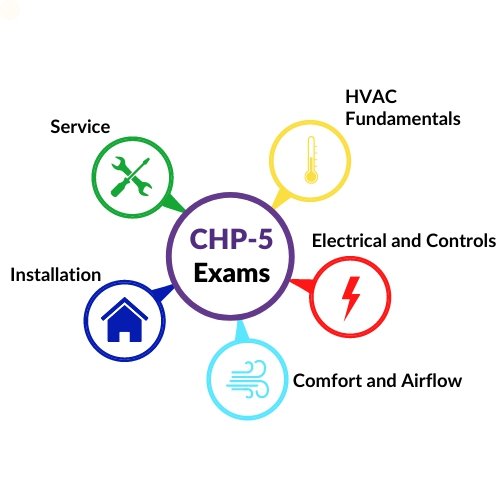
- The Core Exam (Mandatory): 50 questions covering Safety, Tools, Soft Skills, Heat Transfer, and Electrical.
- The Specialty Exam (Choose One): 100 questions on your specific field (AC, Heat Pump, Gas Heating, Oil Heating, or Distribution).
- Passing Score: Plan around a 70% passing threshold and confirm current rules with your testing provider.
- Format: NATE offers proctored testing options, including some live online formats, depending on the exam and provider.
Service vs. Installation Tracks
When registering for a Specialty exam, you must choose either the Service track or the Installation track. Service exams focus on diagnostics, troubleshooting, and repair. Installation exams focus on duct design, equipment startup, and code compliance. Most residential technicians choose the Service track.
Where and How to Register
NATE exams are delivered through authorized testing centers, including Pearson VUE locations across the United States, as well as live online proctored sessions. To schedule your exam, visit the official NATE website (natex.org) for the most current registration steps, testing center locator, and exam scheduling options.
Once you understand the structure, the best next step is usually a NATE certification practice guide or a specialty-specific prep page such as AC, Heat Pump, or Gas Heating.
How to Choose the Right Specialty
The right specialty depends less on what sounds impressive and more on the systems you actually work on. Choose the exam that best matches your field experience, service calls, and equipment exposure.
Typical Study Timeline
Most technicians spend 2-4 weeks preparing for the Core exam and 4-8 weeks for a Specialty exam, depending on experience level. If you work daily with a specific system type, your specialty prep time may be shorter.
AC Specialty
Best for technicians working heavily with cooling diagnostics, airflow, refrigerant charging, and electrical troubleshooting in air conditioning systems.
See AC Specialty PrepHeat Pump Specialty
Best for technicians handling reversing valves, defrost logic, dual-fuel systems, and seasonal troubleshooting across both heating and cooling operation.
See Heat Pump PrepGas Heating Specialty
Best for furnace-focused service work involving combustion safety, venting, ignition systems, and heat-rise diagnostics.
See Gas Heating Prep
Know Your NATE Path? Start Practicing the Right Exam.
Once you understand the certification path, the next step is focused practice. Use our NATE certification practice guide to build confidence before you schedule a Core or Specialty exam.
- Practice by Core or Specialty path
- Use explanations to strengthen diagnostic logic
NATE Certification Cost in 2026
The path to nate certification involves testing fees. Prices vary by testing center, exam type, and delivery method, so these numbers should be treated as planning ranges rather than guaranteed prices.
| Certification Type | Estimated Cost |
|---|---|
| Ready-to-Work | $50 (Includes study guide) |
| HVAC Support Tech | $100 |
| Core Exam (Proctored) | $130 - $250 |
| Specialty Exam (Proctored) | $130 - $250 |
| Retake Fee | Varies (Usually discounted) |
Retakes, scheduling delays, and weak specialty selection can all increase your total cost. That is why many technicians review a NATE certification practice guide before committing to a test date.
Can NATE Certification Help Your Career and Pay?
NATE does not guarantee a raise by itself, but it can support stronger credibility, better technician positioning, and improved job opportunities, especially for service-oriented roles where diagnostics matter.
*Illustrative residential service technician salary comparison. Actual wages vary by market, role, and experience. See our HVAC technician salary guide for broader pay context.
Renewal and Continuing Education
NATE certification is not a one-time credential. Professional-level NATE certification is valid for 2 years from the date you pass. To renew, you must earn 16 Continuing Education Hours (CEH) before your certification expires.
Common Ways to Earn CEH
- Manufacturer training programs — many equipment brands (Carrier, Trane, Lennox, etc.) offer approved CEH courses.
- Online continuing education platforms — HVAC-specific online providers offer self-paced CEH courses.
- Trade association events — ACCA, RSES, and local HVAC association workshops often count toward CEH.
- Earning additional NATE specialty certifications — passing a new specialty exam can count toward your renewal hours.
Always confirm current renewal rules and approved CEH providers directly with NATE (natex.org) before relying on older information. A good certification plan includes not just passing the exam, but knowing how you will maintain it afterward.
If you are comparing certifications, this is another place where NATE differs from EPA 608. EPA 608 certification does not expire once earned, while NATE requires active renewal on a 2-year cycle.
Frequently Asked Questions
What is the difference between NATE and EPA 608?
EPA 608 is the federal refrigerant-handling requirement, while NATE is a voluntary professional credential used to show stronger HVAC knowledge and diagnostic ability.
Do I need the Core exam for NATE certification?
For the Professional path, most candidates need to pass the Core exam plus a Specialty exam. Always confirm the current pathway for the certification level you are pursuing.
What is a passing score?
You need to score 70% or higher on both the Core and Specialty exams to pass.
Can I take the NATE exam online?
Yes! NATE offers "Live Online Proctoring" so you can take the exam from home with a webcam.
How much does NATE certification cost?
Costs vary by certification level and testing center, but a full Professional path often includes separate Core and Specialty exam fees plus possible retake costs. Expect roughly $260 to $500 total for the Professional level.
Does certification expire?
Yes. NATE certification is valid for 2 years. You must earn 16 CEH (Continuing Education Hours) to renew.
Is NATE certification worth it for HVAC technicians?
For technicians who want stronger credibility, clearer specialty positioning, and better diagnostic-oriented career opportunities, NATE can be a worthwhile investment when matched to the right career stage.
Know Your NATE Path? Start the Right Next Step.
If you need exam practice, start with the NATE practice guide. If you already know your specialty, jump straight into the prep page that matches your field.
Open Practice Guide